Modern medicine offers a wide range of accessible ways to monitor heart health. One of them is Holter monitoring, a method that helps doctors get a complete picture of how a patient’s heart works over a longer period of time.
Holter monitoring is continuous recording of the heart rhythm, usually over 24 to 48 hours, although in some cases it can last longer.
The method is named after Dr. Norman Holter, who developed it in the mid-20th century. It records an electrocardiogram (ECG) using a small portable device that the patient wears throughout the monitoring period.
How is Holter monitoring done?
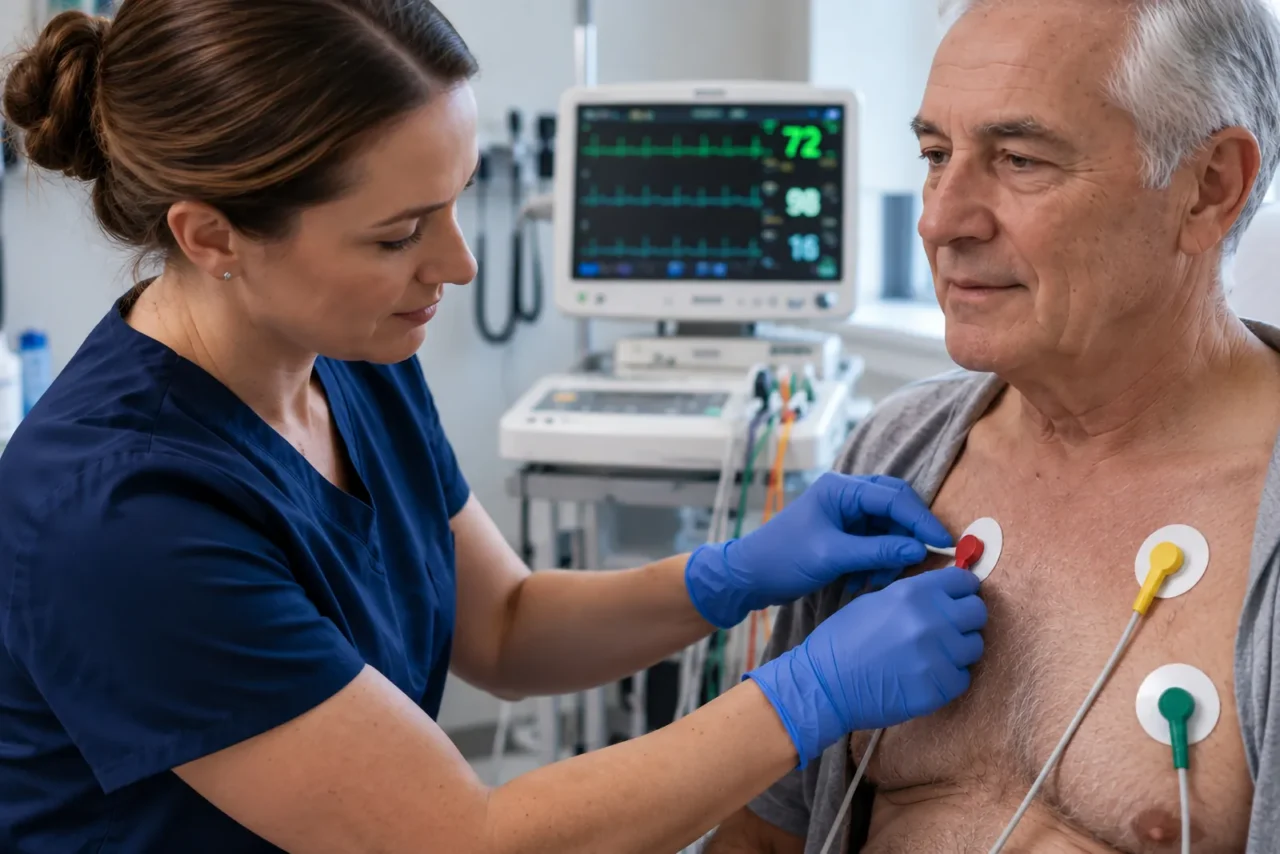
Small electrodes are attached to the patient’s chest and connected to a device that can be comfortably worn on a belt or carried in a pocket. The device continuously records the heart’s electrical activity, making it possible to assess how the heart works during everyday life. This is not possible with a standard ECG, which lasts only a few minutes.
Benefits of Holter monitoring
- Long-term heart rhythm assessment. Detects rhythm disorders that might not show up during a short ECG.
- Linking symptoms to heart activity. Helps determine whether palpitations, dizziness or fainting are related to rhythm disorders.
- Assessing treatment effectiveness. Shows how well prescribed medication is working, for example in arrhythmia treatment.
- Detailed data analysis. The device collects data on heart rate, rhythm and electrical activity.
Benefits for the patient
Holter monitoring is a non-invasive and painless procedure. It does not require major lifestyle changes, and the patient can carry on with daily activities almost as usual. The procedure is especially useful for people with unexplained heart symptoms or those being treated for heart rhythm disorders.
In conclusion
Holter monitoring is a valuable tool that provides accurate information about heart health and supports well-informed treatment decisions. If you have concerns about your heart health or this procedure has been recommended to you, talk to a doctor.